

How it works
The whole build is three moves
Most play structures ask for an afternoon, an allen key and a spare adult. A NimoPlay asks for a clear patch of floor. The panels do the engineering, so the build is the same every time: lay them out, slide them together, drop the roof on. Below is what each stage actually looks like, how long it takes, and what happens when you want the room back.
Shop playhouses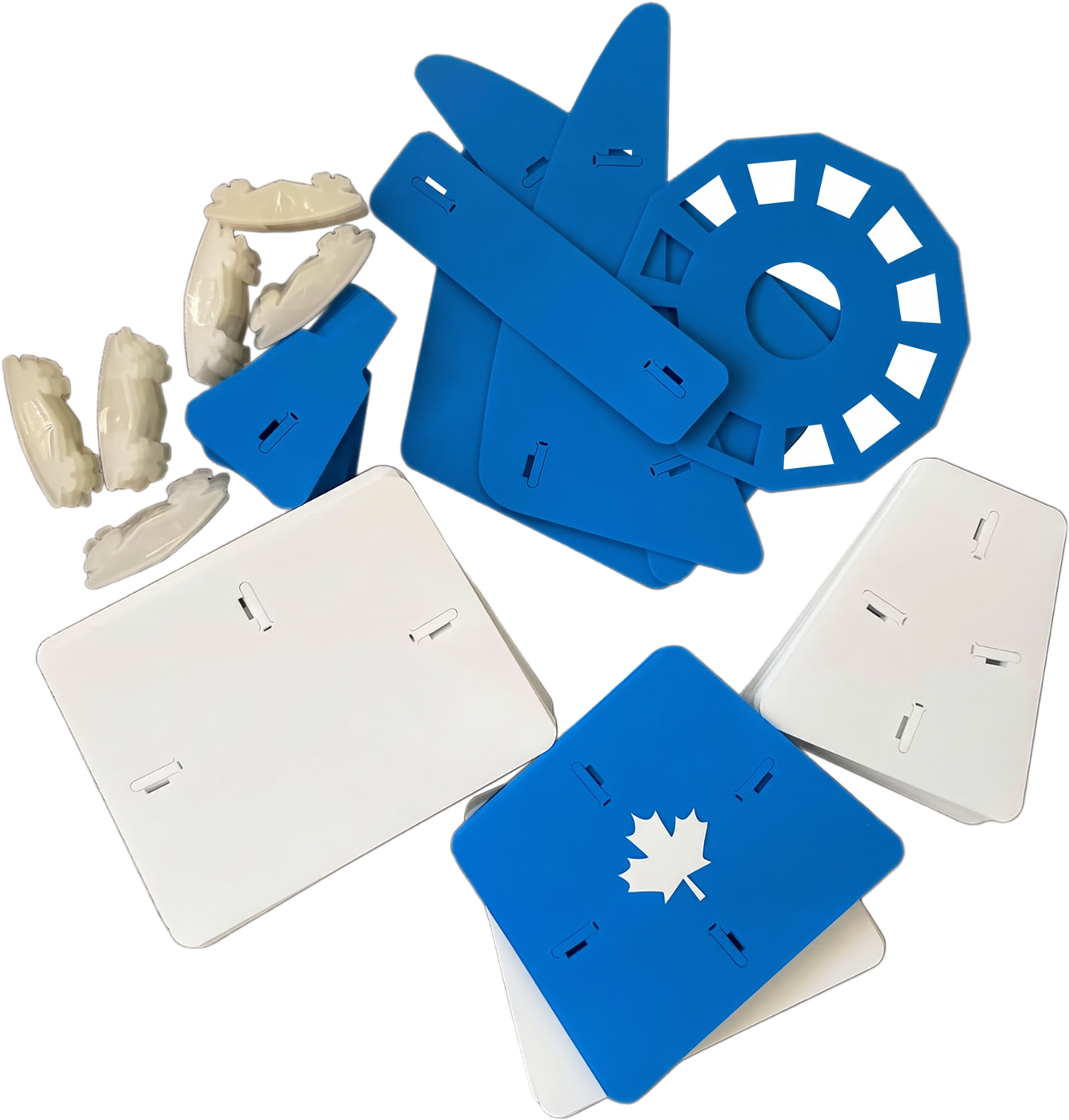
Unpack
Every set arrives flat in one box: numbered panels, a roof and nothing else. There is no hardware bag to lose and no instruction booklet to decode. Lay the panels out on the floor in the order they came, and you can see the whole build in front of you before you start.
Two minutes. One adult, or one adult and an enthusiastic four-year-old.

Lock the panels together
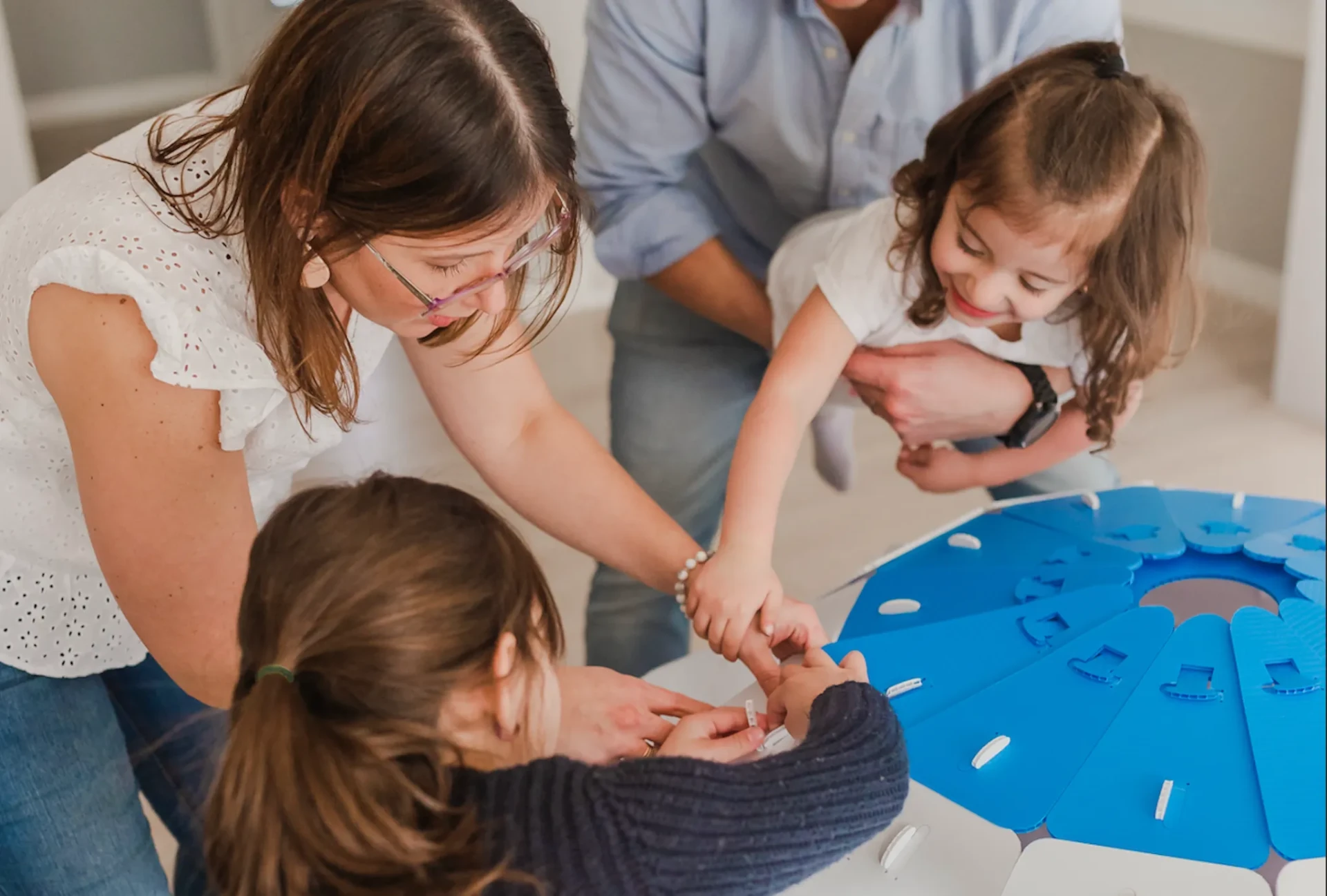
Each panel has a machined edge that slides into the next and holds with pressure and geometry, the same principle as a well-cut joint in furniture. Walls square themselves as you go, corners pull tight, and the roof drops on last. Nothing is glued, nothing is screwed, and nothing works loose during play.
Around five minutes for the Essential, closer to ten for the larger Advance.
Play, then pack it flat
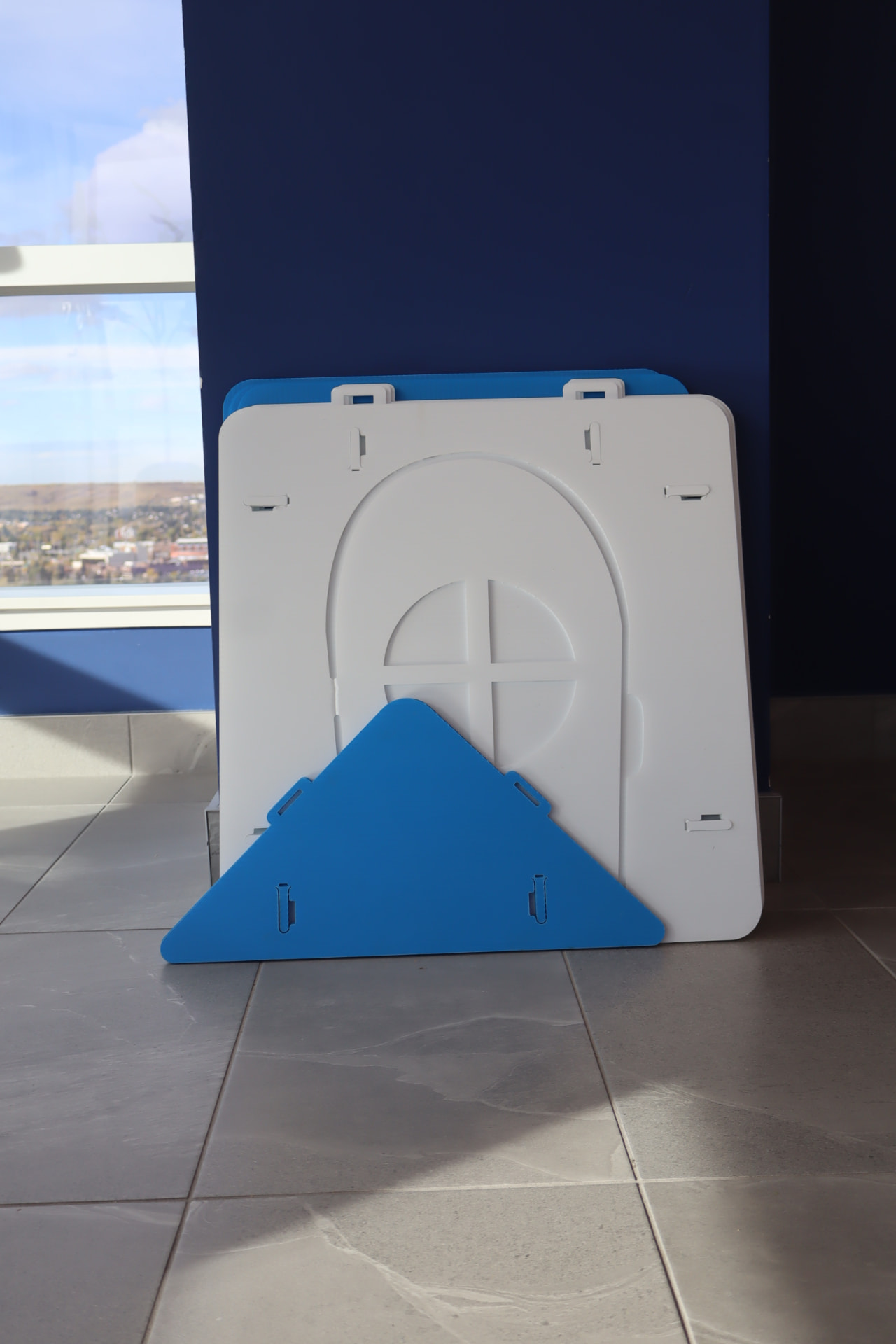
Once it is standing, it stays standing. Kids climb in, hang fabric over the window, run a shop out of it for three weeks straight. When you need the floor back, lift the roof, unclip the walls and slide the stack behind a door or under a bed. Rebuild it next weekend in a different corner of the house.
Down in under three minutes, flat enough for a 12 cm gap.
What makes it last
The locking system is the part people notice first. What keeps a NimoPlay in the room a year later is everything around it: the weight, the storage, the way it looks in a living room and the fact that it can be rebuilt over and over.
No screws, no glue, no tools
The patented locking system holds every panel with pressure and geometry alone. There is nothing to tighten, nothing to strip and nothing to replace two years from now. If you can lift a panel, you can build the house, which means kids can help build it too, and that first build becomes part of the play.
Light to move, flat to store
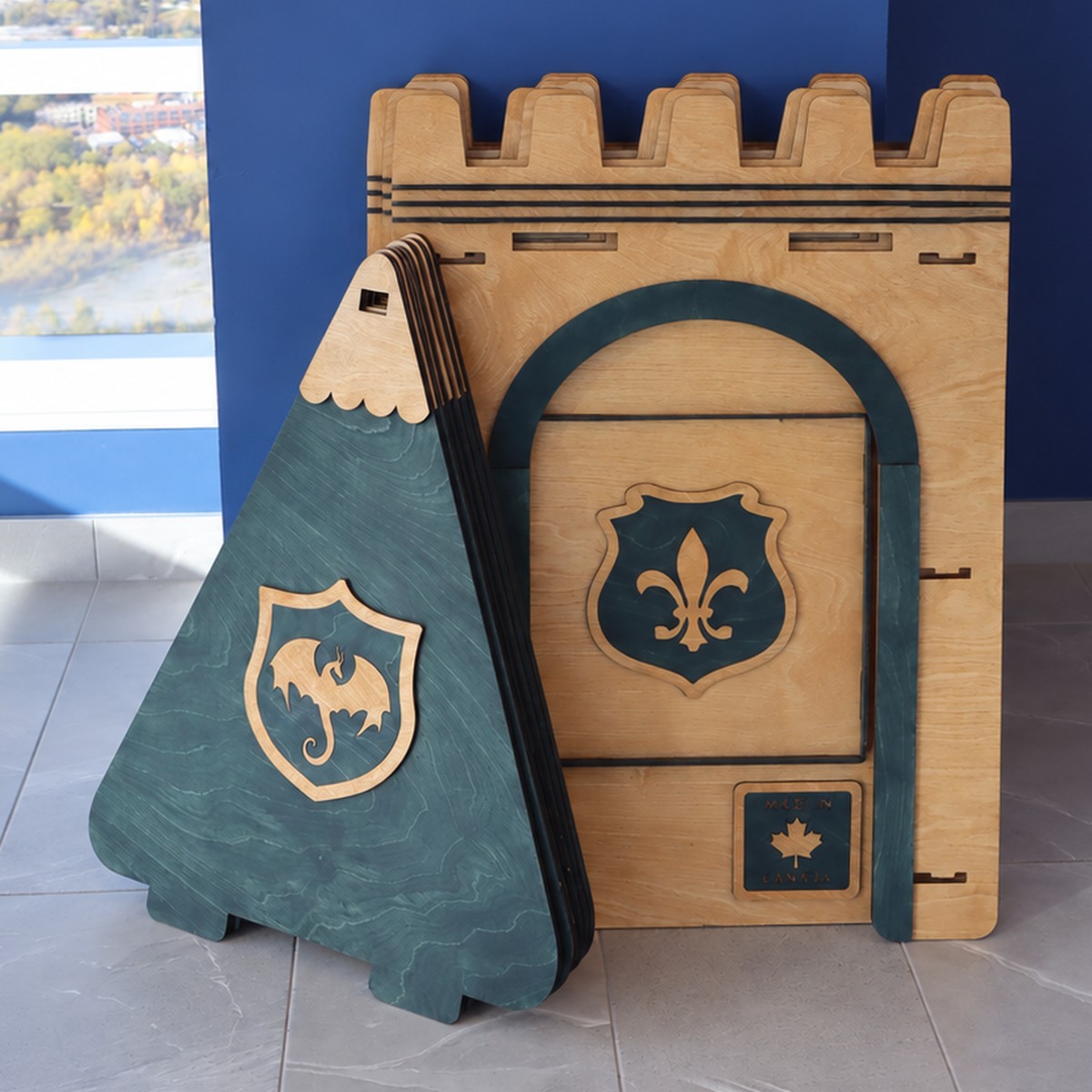
A playhouse should not take over the living room for the rest of the year. Panels are light enough to carry one-handed and pack down to a flat stack that slides behind a door, under a bed or beside a wardrobe. It was designed for apartments and condos first, where floor space is the scarcest material in the home.
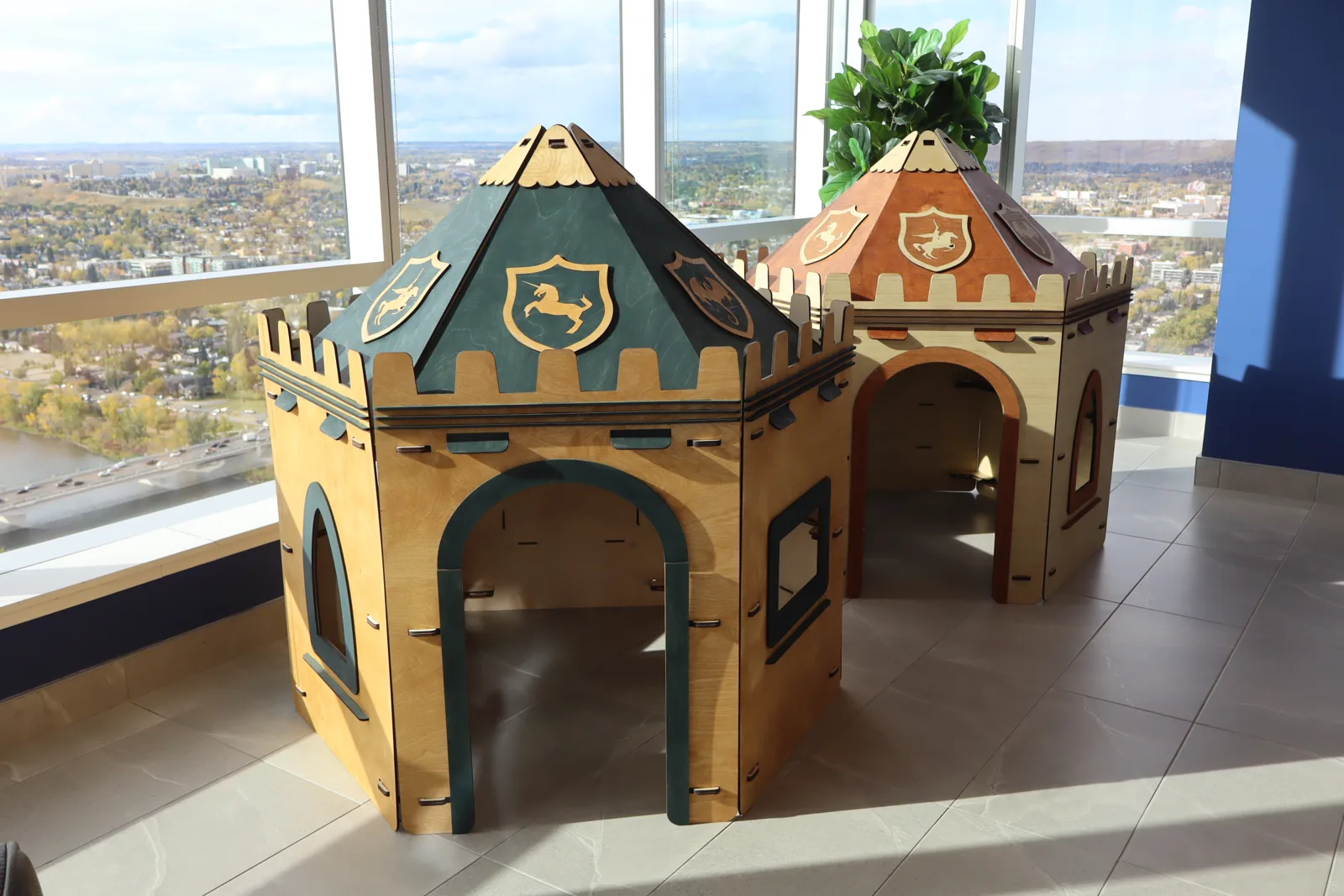
Designs you won't find elsewhere
Igloos, houses, castles and Santa's Workshop, drawn with the same restraint we would give a piece of furniture. Glued-on wood details run around all four sides, so it looks finished from every angle, including the one facing your sofa.
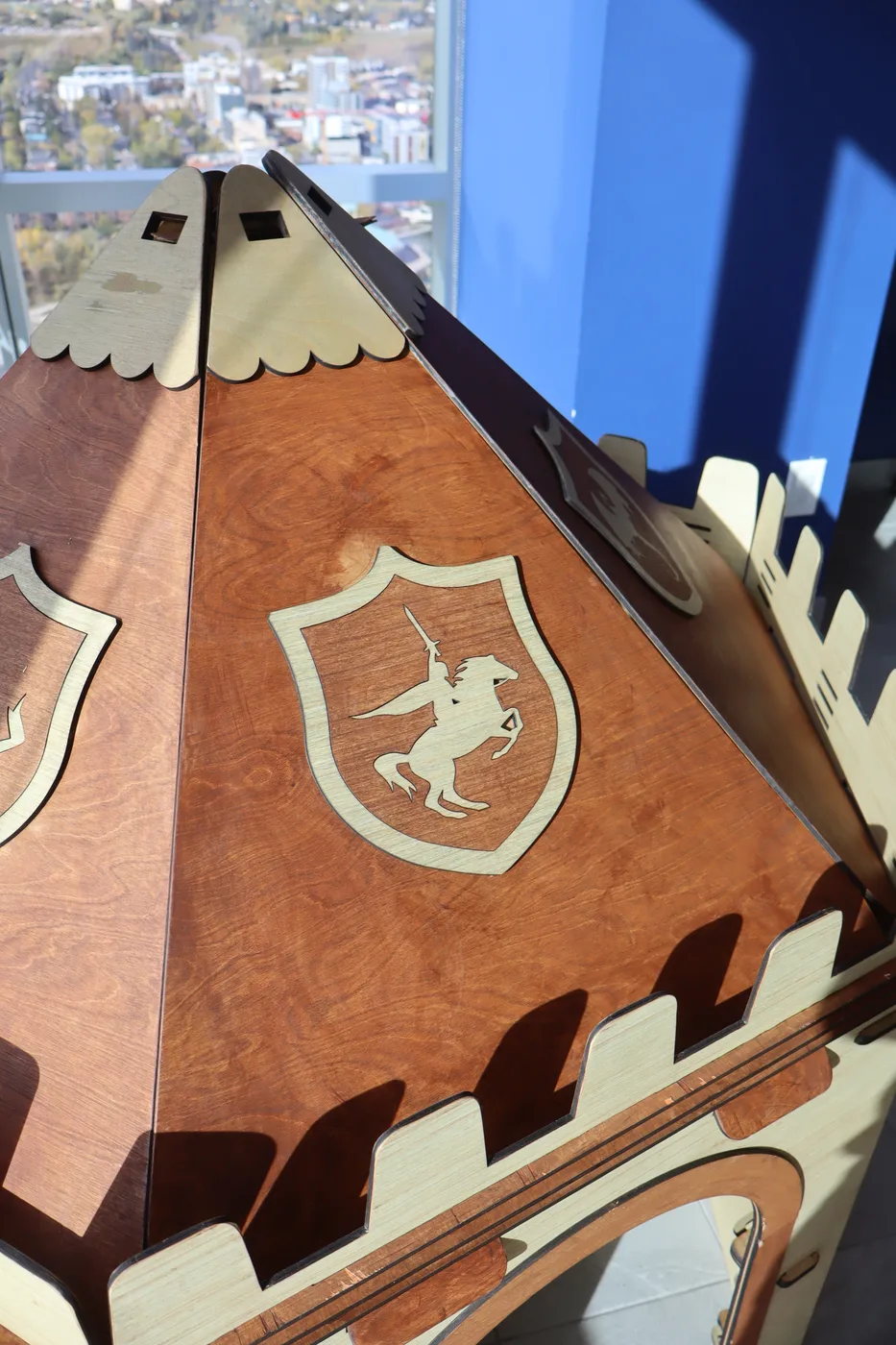
Built to be rebuilt
Take it apart, move it, build it again. The joints are made for repetition, not for one assembly. One playhouse replaces a shelf of plastic toys and keeps going through siblings, seasons and new homes instead of heading to landfill after a birthday.

Made in Canada
Designed and manufactured here, with materials picked for durability and finishes chosen to be safe for the kids who chew on the doorframe. We make fewer products and spend longer on each one, because a playhouse should outlast the phase that prompted it.
What a playhouse gives your child
A NimoPlay is deliberately plain on the inside. There are no buttons, no sounds and no story printed on the walls, so the child decides what it is today. Here is what that turns into once it is standing in the room.
- A house they can build
- Panels are light enough for a four-year-old to carry and lock together, so the build itself is the first game. Nothing sharp, nothing to tighten, nothing an adult has to take over.
- A window and a doorway
- The cut-out window and open doorway are sized for serving pretend coffee, waving at a sibling and keeping an eye on you from inside their own house.
- A room with nothing in it
- No lights, no sounds, no printed story. The walls stay blank on purpose, so a shop on Monday can be a vet clinic on Thursday.
- Space for two
- The footprint fits two children comfortably, which is where sharing, turn-taking and negotiating who is the shopkeeper actually happen.
- Somewhere to go quiet
- A small enclosed nook with its own roof is a genuinely good place to calm down after daycare, with a cushion and a book.
- Solid, not wobbly
- Walls square themselves and hold under leaning, hanging blankets over the roof and the usual enthusiastic entrances.
- It moves with them
- Carry it to the bedroom, the balcony door or grandma's house. The playhouse follows the play instead of pinning it to one room.
- It lasts past the phase
- Rebuild it hundreds of times, hand it down to the next child, and the same house becomes a castle, a saloon and a spaceship along the way.
The practical details
- Who it suits
- Best for ages two to eight, indoors, on any flat floor. Kids can help with the build from about four.
- Space needed
- A corner is enough. Panels sit flush to the wall, so walkways stay clear.
- Storage
- Packs to a flat stack a few centimetres thick. Behind a door, under a bed, beside a wardrobe.
- Care
- Wipe clean with a damp cloth. Keep it indoors and out of standing water.
- Safety
- No loose hardware, no sharp fixings, rounded edges and finishes chosen for young children. For safety, don't allow children to climb on the roof or walls: playhouses are for playing inside, not climbing on.
- Lifespan
- Designed to be taken apart and rebuilt hundreds of times and passed to the next child.
Still deciding between the two sizes? Compare Essential and Advance or read the FAQ.
Come see what we've built
Two playhouses, one patented locking system, both made in Canada. Pick the one that fits your space and have it standing the day it arrives.